


.png)



.png)
.png)
.png)
.png)
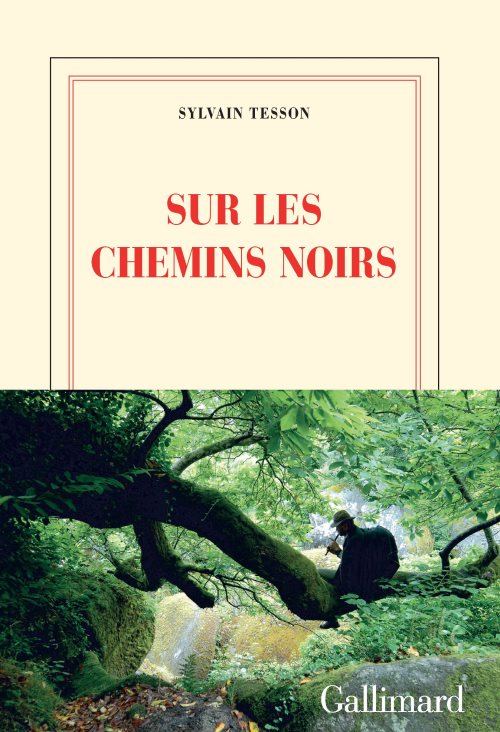
Sur les chemins noirs
Auteur(s)
TESSON SYLVAINEditeur
GALLIMARDRayon
Littérature / Romans / Romans francophonesDisponible sous 15 jours


Résumé :
2014. "L'année avait été rude. Je m'étais cassé la gueule d'un toit où je faisais le pitre. J'étais tombé du rebord de la nuit, m'étais écrasé sur la Terre. Il avait suffit de huit mètres pour me briser les côtes, les vertèbres, le crâne. J'étais tombé sur un tas d'os. Je regretterais longtemps cette chute parce que je disposais jusqu'alors d'une machine physique qui m'autorisait à vivre en surchauffe. Pour moi, une noble existence ressemblait aux écrans de contrôle des camions sibériens : tous les voyants d'alerte sont au rouge mais la machine taille sa route. La grande santé ? Elle menait au désastre, j'avais pris cinquante ans en dix mètres. A l'hôpital, tout m'avait souri. Le système de santé français a ceci de merveilleux qu'il ne vous place jamais devant vos responsabilités. On ne m'avait rien reproché, on m'avait sauvé. La médecine de fine pointe, la sollicitude des infirmières, l'amour de mes proches, la lecture de Villon-le-punk, tout cela m'avait soigné. Un arbre par la fenêtre m'avait insufflé sa joie vibrante et quatre mois plus tard j'étais dehors, bancal, le corps en peine, avec le sang d'un autre dans les veines, le crâne enfoncé, le ventre paralysé, les poumons cicatrisés, la colonne cloutée de vis et le visage difforme. La vie allait moins swinguer. Il fallait à présent me montrer fidèle au serment de mes nuits de pitié. Corseté dans un lit étroit, je m'étais dit à voix presque haute : "si je m'en sors, je traverse la France à pied". Je m'étais vu sur les chemins de pierre ! Je voulais m'en aller par les chemins cachés, flanqués de haies, par les sous-bois de ronces et les pistes à ornières reliant les villages abandonnés. Il existait encore une géographie de traverse pour peu que l'on lise les cartes, que l'on accepte le détour et force les passages. Loin des routes, il existait une France ombreuse protégée du vacarme, épargnée par l'aménagement qui est la pollution du mystère. Une campagne du silence, du sorbier et de la chouette effraie. Des motifs pour courir la campagne, j'aurais pu en aligner des dizaines. Me seriner par exemple que j'avais passé vingt ans à courir le monde entre Oulan- Bator et Valparaiso et qu'il était absurde de connaître Samarcande alors qu'il y avait l'Indre- et-Loire. Mais la vraie raison de cette fuite à travers champs, je la tenais serrée sous la forme d'un papier froissé, au fond de mon sac..." Avec cette traversée à pied de la France réalisée entre août et novembre 2015, Sylvain Tesson part à la rencontre d'un pays sauvage, bizarre et méconnu. C'est aussi l'occasion d'une reconquête intérieure après le terrible accident qui a failli lui coûter la vie en août 2014. Le voici donc en route, par les petits chemins que plus personne n'emprunte, en route vers ces vastes territoires non connectés, qui ont miraculeusement échappé aux assauts de l'urbanisme et de la technologie, mais qui apparaissent sous sa plume habités par une vie ardente, turbulente et fascinante.
Date de parution : 13/10/2016Collection : BLANCHE
Format H : 220
Format L : 147
Poids : 196 g
Epaisseur : 13

Sur les chemins noirs
C'est le récit d'un voyage né d'une chute. « Pris de boisson, je m'étais cassé la gueule d'un toit où je faisais le pitre. »
Côtes, vertèbres et crâne brisés, Sylvain Tesson passe quatre mois à l'hôpital et se promet de traverser la France à pied. Lui, le coureur de taïga, le sportif en surchauffe permanente a pris « cinquante ans en huit mètres ». Sans s'appesantir sur ses douleurs physiques et morales – « la vie allait moins swinguer » – il se met en route, comptant sur le chemin pour lui rendre des forces. Il prend la tangente, une diagonale du Mercantour au Cotentin, évitant les routes balisées. Pendant plus de deux mois, il marche 30 ou 40 kilomètres par jour sur les chemins noirs, ces fils tracés sur les cartes au 25 000e qui traversent les zones d'hyper-ruralité. C'est un territoire épargné par l'aménagement, hors des zones péri-urbaines, une France de sous-bois, d'ornières et de forêts, mais ce sont aussi des villages abandonnés, des traces d'une vie disparue. La « bile noire » n'est pas loin et Sylvain Tesson laisse entrevoir ses interrogations : « Ce furent des jours mélancoliques », « Pourquoi passer une vie à cavaler ? », « Que rapporte-t-on de ces gigues ? »
Mais la marche dissipera les nuages noirs, et l'écrivain-voyageur terminera son voyage « lavé de toute peine, remis debout ».
It is the story of a trip born from a fall; “Drunk, I had fallen off a roof where I was clowning around”. With broken ribs, vertebras, and skull, Sylvain Tesson spent 4 months in a hospital, resolute that if he were to recover he would cross France by foot. He, the Taiga runner, the ever-frenetic sportsman’s incident of fate has taken “50 years in 8 meters” off his mobility. Without complaining about his physical and moral pain – “life will swing a bit less” – he gets going, expecting the trail to re-establish his shattered back strength. He beats a diagonal path from the Mercantour to the Cotentin, away from the well-trodden and familiar footpaths. In more than 2 months, he walked 30 to 40 kilometres every day on the “black paths”; the drawn lines on the 25 000 maps which cross the areas of deep and uninhabited country. It is a territory saved from town and country planners, away from suburbia, a France made of ruts and forests, but also deserted villages, and tracks of a bygone age. His sadness for better days are being carried on his trek, as Sylvain Tesson continues to question himself: ”these were melancholic days”, "why spend a whole life on the run?”, "what do we bring back from these peregrinations ?”
The therapy of walking helped clear those ominous black clouds, and the writer ended his trip “washed from everything, back standing - back on his feet”.
Véronique
Vous aimerez aussi
Divas
£23.60
L'embellie des chimeres
£21.25
Les maitres du sol
£27.15
Les enfants gates de butare
£24.70
Chante mechante
£21.85
Rien a voir
£24.80
Humain
£22.45
Darya & dounya
£26.00
Lady diana, ma mere et moi
£22.45
L'elephant
£18.90
Teleny - etude physiologique
£14.20
Alice et autres nouvelles - edition collector
£14.20
Comment draguer la catholique sur les chemins de compostelle - edition collector
£14.20
Sex in the kitchen - edition collector
£14.20
La vie est une grande aventure
£24.70
Ciao bella
£10.30
Assises
£9.95
Les evadees - partie 1
£25.85
Eva des forets - le nouveau roman 2026 de l'auteur a succes, julien sandrel
£24.70
L'eden a l'aube
£11.70
Du même auteur

-
Achat non disponible
- Plus de détails
Sous l'etoile de la liberte
£8.15

-
Achat non disponible
- Plus de détails
Notre-dame de paris - o reine de douleur
£8.30
Un ete avec rimbaud
£17.15

Une tres legere oscillation
£22.45
-
Achat non disponible
- Plus de détails
Un ete avec homere - voyage dans le sillage d'ulysse
£31.90
Avec les fees
£24.80
Avec les fees
£11.25
Les piliers de la mer
£25.85
Blanc
£11.25
Blanc
£23.60
Noir - textes et dessins
£29.50
Ciel mon moujik !. et si vous parliez russe sans le savoir ? ((reedition))
£9.35
Verification de la porte opposee
£12.65
Au nom de l'arbre
£23.60
Sous l'etoile de la liberte
£8.40
L'or noir des steppes - voyages aux sources de l'energie
£8.40
La panthere des neiges
£10.15
Aphorismes sous la lune et autres pensees sauvages
£8.75
L'energie vagabonde
£38.95

Berezina
£23.05

Carnets d'aventures
£8.05

On a roule sur la terre
£10.65
-
Achat non disponible
- Plus de détails
Dans les forets de siberie
£10.15

-
Achat non disponible
- Plus de détails
Berezina
£10.15

-
Achat non disponible
- Plus de détails
S'abandonner a vivre
£10.90

-
Achat non disponible
- Plus de détails
Dans les forets de siberie - fevrier - juillet 2010
£10.90

-
Achat non disponible
- Plus de détails
Une vie a coucher dehors
£9.60

S'abandonner a vivre
£22.45

Dans les forets de siberie - fevrier - juillet 2010
£24.80

Anagrammes à la folie
£8.75

La panthere des neiges
£22.45

L'Axe du loup
£8.75

S'abandonner a vivre
£11.25

Dans les forets de siberie - fevrier - juillet 2010
£11.25
Une vie à coucher dehors
£9.60

Berezina
£10.15

Sur les chemins noirs
£9.60

-
Achat non disponible
- Plus de détails
Vérification de la porte opposée
£11.80

Une très légère oscillation
£9.10

Un été avec Homère
£17.15
Dans la même collection
Descente a bahia
£23.60
-
Bientôt disponible
- Plus de détails
L'heritage
£27.15
-
Bientôt disponible
- Plus de détails
Vol de nuit - edition illustree
£28.35
L'elephant
£18.90
Lettres a andre breton - suivi d'autres textes et d'un choix de dessins
£26.00
La confession negative
£27.05
Le fondateur
£25.40
Vies minuscules
£23.60
Les belles images
£15.55
Le garcon ebloui
£18.90
Le pays des etes
£22.45
Je
£24.80
Les vingt ans du jeune homme vert
£16.95
Le palais
£27.15
La solitude des professeurs est infinie
£25.40
La guerre eternelle
£23.60
Nos vies sauvages
£26.00
Les evades du convoi 53
£24.80
Les enfants sont alles au bois
£24.80
Les amours de george
£22.45


